
 Residence
  Location
Bed Bug Legislation
 In reference to the Don't Let the Bed Bugs Bite Act of 2008, Budget Travel asks, 'œShould taxpayers fund the war against bed bugs?' The Act, H. R. 6068, is now in consideration by the House Subcommittee on Commerce, Trade and Consumer Protection,and would primarily give states funding to inspect hotel rooms for bed bugs. Meanwhile, the bill Dale Mallory is sponsoring in the Ohio House of Representatives, which would establish a hotline where Ohio residents could report bed bugs or get information about them, and would require the Dept. of Health to educate the public about bed bugs, is also getting coverage from Cleveland NBC affiliate WKYC and in Vindy.com
 You might protest that bed bugs are not a danger to public health, but then the World Health Organization includes bed bugs in its new book, The Public Health Significance of Urban Pests. And the WHO not just includes bed bugs '” as Renee reminds us in an analysis of the WHO study over on New York vs. Bed Bugs, a bed bug is on the cover, with a tick and a rat. The WHO is concerned about the public health significance of bed bugs. Ohio, along with other states (and cities and countries) should be concerned too.
Even state government is trying to quash the problem.
As you check into a hotel for vacation this summer, keep this sobering thought in mind:
Ohio has a big and growing problem with bedbugs at hotels, as well as at hospitals, nursing homes, jails and even homes '” any place people sleep, no matter how posh or pricey.
Last month, a state legislator introduced a bill to promote bedbug awareness, education and prevention '” a first effort to get a grip on the problem.
With more than 30 legislative co-sponsors and shrieks of horror from constituents, Rep. Dale Mallory, D-Cincinnati, is confident his bill is resonating statewide.
'œThis is out of control, and it's getting worse,' he said. 'œI've toured at least five apartment buildings with infestations, and I can tell you it's a traumatic experience.'
Mallory's bill would use $335,000 in state funds to establish a bedbug program in the Ohio Department of Health.
His proposal would educate hotel owners about the difference between bedbugs and other types of vermin so they can be treated appropriately.
A toll-free number also would be set up so residents could report infestations and ask for information.
The apple seed-sized blood-suckers were almost exterminated in this country in the 1950s thanks to the chemical DDT, vacuum cleaners and better hygiene.
Why the bugs have re-emerged in recent years is a mystery, but it might be because of the popularity of travel to other countries, where the vermin were never eliminated, said Susan Jones, an entomologist with the Ohio State Extension Service.
Americans returning from other countries or foreigners coming here might unknowingly bring the little hitchhikers into this country in their luggage, purses or backpacks.
'œGateway' cities like New York, San Francisco and Cincinnati, which attract lots of travelers and have many multifamily housing units, have proved to be especially welcoming to the bugs.
With more than 800 bedbug complaints last year, Cincinnati and surrounding Hamilton County was arguably the fifth-most-infested urban area nationwide, Jones said. New York is universally acclaimed to be No. 1.
Jones has received complaints from New Philadelphia, Toledo, Cleveland, Columbus, Dublin, Westerville and all parts in between.
 'œPeople move a lot,' she said. 'œIf they move from an infested [apartment] unit, they take their bedbugs with them. Now we get calls from people in single-family dwellings, which we didn't use to get.'
But the rankings might not mean too much because of the general ignorance of bedbugs in the population, experts say. Many people today simply didn't grow up with frequent exposure to insects.
People don't realize the bites on their bodies are from bedbugs, so they don't take action. Or they hire an exterminator but don't notify the local health department. Or they learn to live with the bugs.
There is no Ohio law that requires the reporting of bedbug infestations. There's not even a statewide place to report them, although a bedbug task force has set up a hot line in greater Cincinnati.
Since the mahogany-colored bugs don't come out until 2 or 3 a.m., they're not apparent in the daytime when people are most watchful.
The only obvious clues might be the trail of sticky, black fecal matter they leave behind on mattresses, sheets, floorboards and headboards.
 Mallory, the state legislator, had never even seen a bedbug until leaders from the Cincinnati Council on Aging told him the insects were biting incapacitated seniors.
And earlier this month, he learned that a woman in a wheelchair boarded a bus in Cincinnati with bedbugs clinging to her clothes. The bus had to be taken off-line and treated.
When these things happen, 'œpeople are ashamed. They're embarrassed. They're branded as being filthy or poor,' said Mallory, even though bedbugs are no respecters of socioeconomic class.
As for treatment, effective remediation can take weeks and cost tens of thousands of dollars in a multiunit apartment building, said Scott , president of the Ohio Pest Control Association.
The problems the exterminators face are manifold. They don't have chemicals to effectively treat the bugs. Before it was removed from the market in the 1970s, even DDT was losing its effectiveness against bedbugs.

 A few bed bugs can become a large infestation quickly. One female bed bug may produce up to 500 offspring during its lifetime, and three generations can live per year. Imagine how many bed bugs you'd have in a year if just one reproductive pair finds its way into your home. As with any pest, knowing its life cycle will help you eliminate it.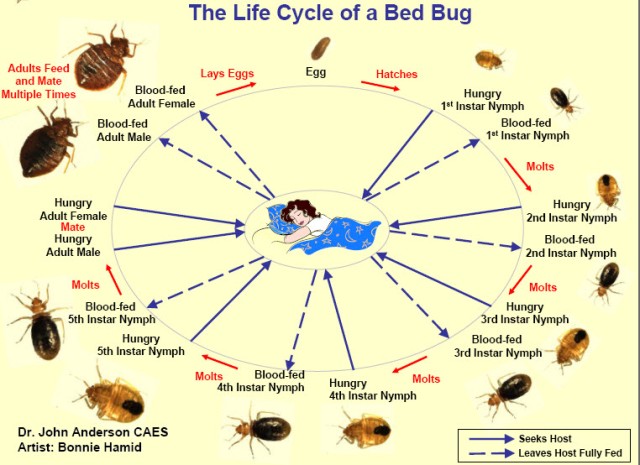
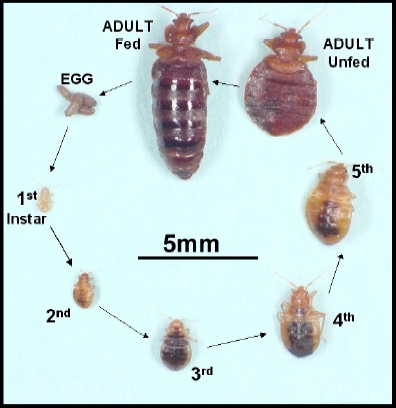
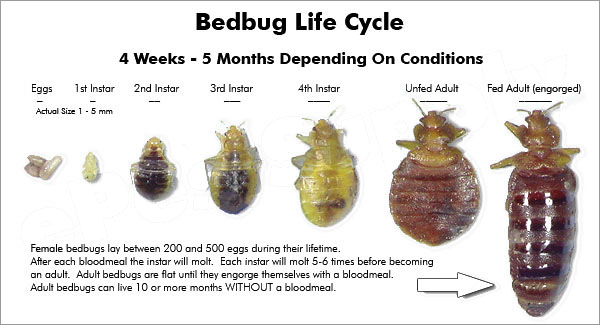
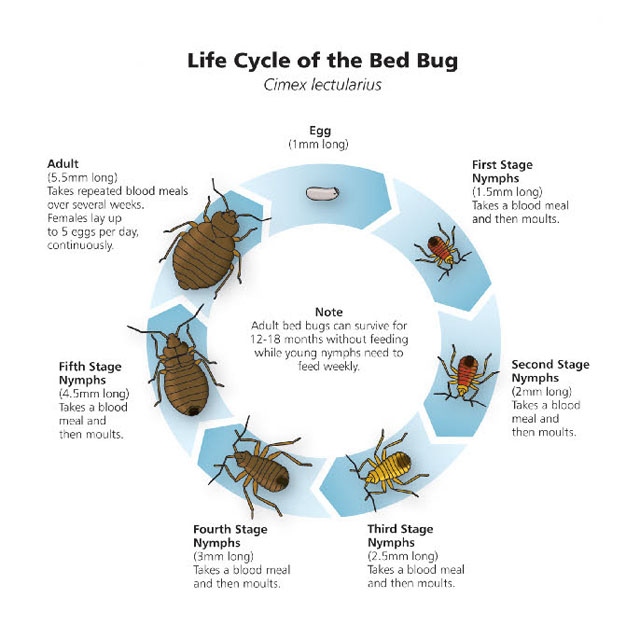
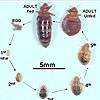
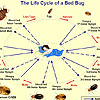
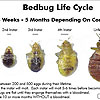
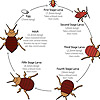

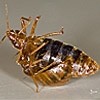
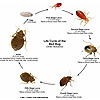

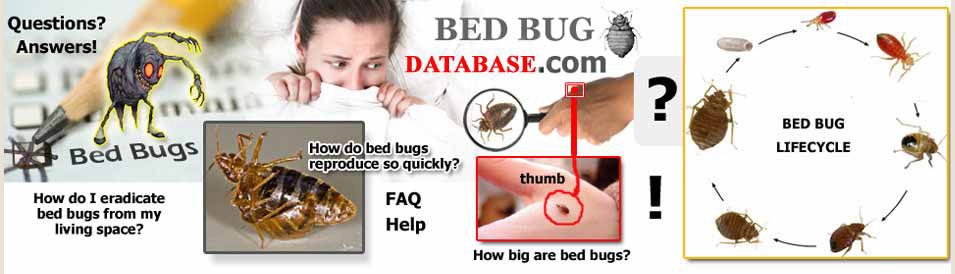
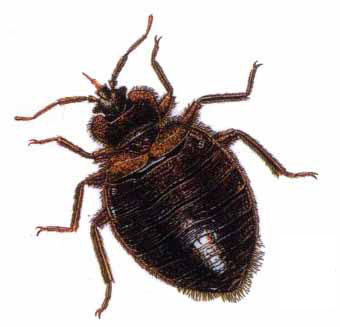
 Bed bugs are insects. They are tiny but can be observed through naked eyes; an adult one will grow to about quarter of an inch or 4mm in length and half that length in width. They are generally oval shaped with a flat tops and bottoms. Hatchlings can be as small as an apple seed. They have microscopic hairs.
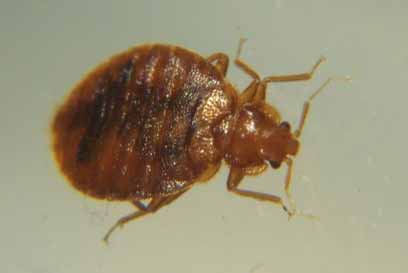 Bed bugs are parasites. In other words they depend on another animal known as a host to live, without giving anything beneficial in return to the host. Bed bugs have evolved to feed on the blood of warm blooded animals. The two main groups of warm blooded animals they prefer are birds and mammals. The common bed bug that infest human home is scientifically known as Cimex lectularius.
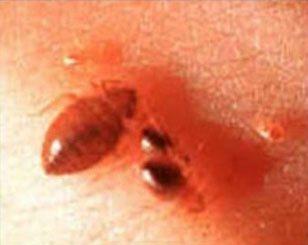
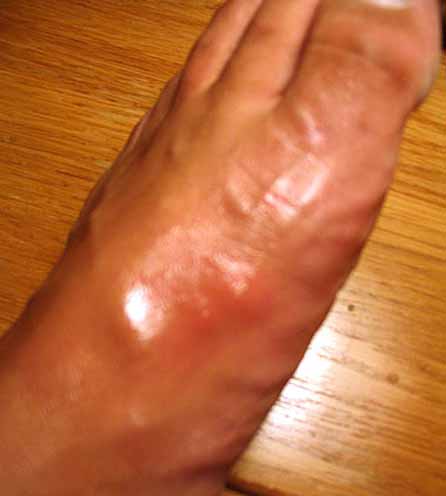 Bed bugs that infest human homes usually try to suck blood at night while the host is sleeping. Their bite is painless. However repeated biting will result in small lesions which are similar to the lesions resulting from mosquito bites or flea bites. The lesion is caused by the human body's reaction to the saliva that bed bug injects during the bite.
 One of the first things anyone who finds out they have a bed bug infestation should get is a mattress encasement. This is just a little bit different from the standard cover you would get that just keeps the top from getting stains on it. Rather than just going over it, it actually zips around it entirely and seals up the inside - meaning no bugs are getting in or out. The ones that still live inside will die off, because they've got no chance to get out and get any food. That will take at least six months or so and up to eighteen in extreme cases (they can live a long time without feeding). However, there really isn't anything wrong with having them in there as long as they can't bite you.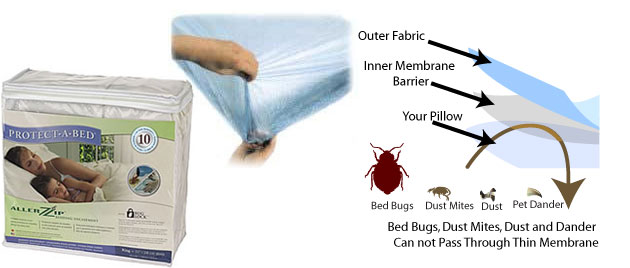




 Terry Surface Fabric with Interlock Sidewalls and Bottom; Anti-Microbial Treatment; 6-Sided Protection; Bug Guard TM Closure System. "Our Allergy Sentry Mattress Encasement offers them a reasonably priced and effective way to keep their mattress(e's) without the concerns of bed bugs escaping to re-infest their home or property."

 If your mattress is already infested with bed bugs and you do not properly clean it and you put the mattress cover on it, this will simply suffocate the bed bugs inside and they will die, including the eggs. If your mattress is totally ruined by bed bugs, you might be required to buy a new mattress and then cover it with the bed bug mattress covers. One of the ways that bed bugs are spread is by people throwing out their mattresses and then other people picking them up from the street. If you are going to throw out your mattress, please put warning signs on the mattress to let people know. Many pest control companies recommend that you do not throw out your mattress but instead get it properly treated. If your bed bug pest control exterminator is coming to your home and you can not wait, you can always vacuum, steam clean and scrub your mattress, until they come, as an alternative to throwing out the mattress. Some mattresses are so infested with bed bugs, that throwing it out is the only option for them, then if this is your situation, put a warning on the mattress(es), so some unfortunate soul does not pick up the mattress and take the bed bugs home with them.